
It is 5:00 in the evening in December, and it is already dark. You carry groceries from the driveway to the front door, feeling for the edge of each step with your foot. Most of us have done it. Most of us have also nearly missed a step doing it. Thoughtful landscape lighting installation fixes this problem, and it does so in every season, not just on summer nights.
This post covers why outdoor spaces get harder to use after dark, what to light first, and how a good plan keeps working from the first frost to the last warm evening of fall.
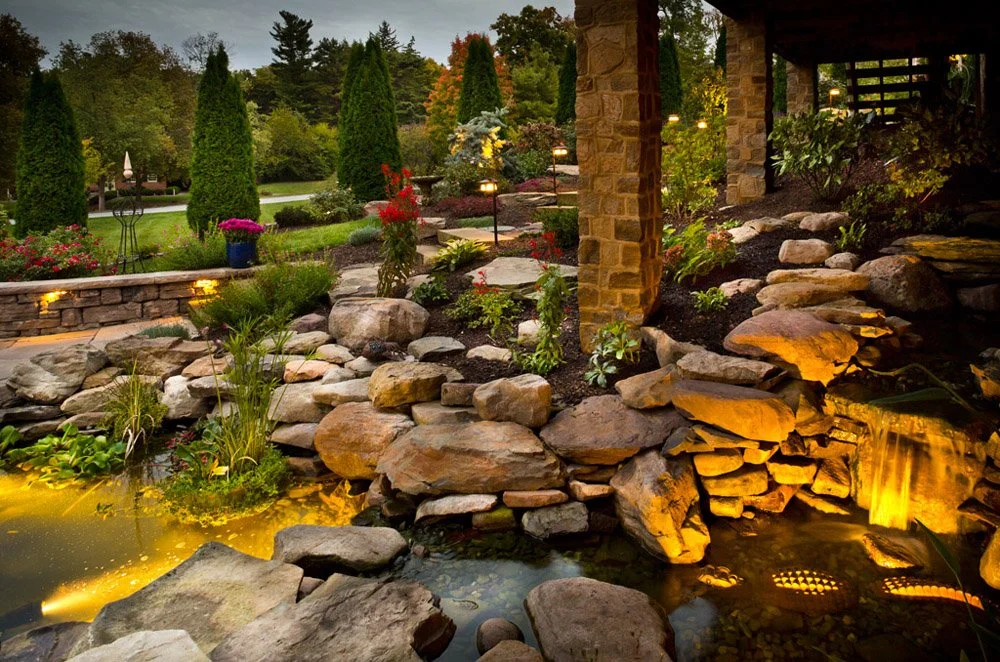
Why Dark Yards Cause Real Problems
A yard that looks fine at noon can be hard to read at night. Steps blend together. Walkway edges disappear. A garden bed that sits two inches above the path becomes a trip hazard.
The numbers back this up. The Home Safety Council found that nearly 5.1 million Americans are injured each year in falls in and around the home. Its advice for porches and walkways is simple: install bright lights over them and put handrails on both sides of the steps.
A study in the National Library of Medicine's PubMed Central archive looked at falls in adults with vision impairment. Fewer home falls were found with better lighting, and the authors concluded that lighting improvements may reduce fall rates in older adults.
So lighting is not only about looks. It is about getting people to the door safely.
What Does Landscape Lighting Installation Actually Include?
Many homeowners picture a few solar stakes pushed into the ground. A professional installation is different. It is a planned system, usually low voltage, that places fixtures where they do the most good.
A typical layout includes:
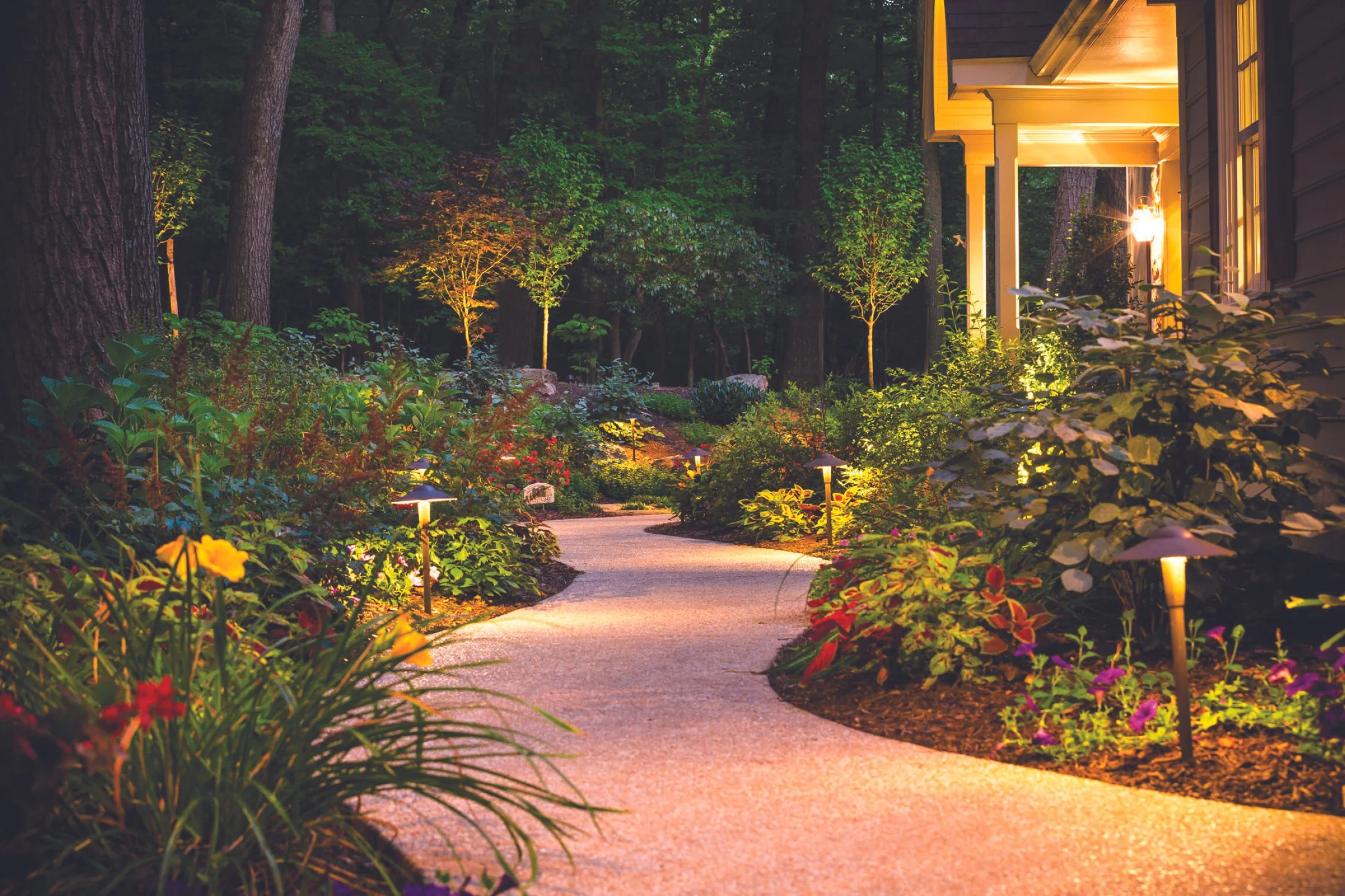
Path lights that mark walkway edges without glare
Step and riser lights that make every tread visible
Uplights and downlights for trees, walls, and entries
Patio and deck lighting for dining and gathering areas
A transformer and timer so the system runs on its own
The goal is even, soft light. Dark spots between bright spots are a problem, because your eyes cannot adjust that quickly.
What Should You Light First?
If you cannot do everything at once, start with the places where a fall would hurt most. This simple order works well:
Steps and stairs. Changes in height are the biggest hazard.
The main walkway from driveway to door. You use it every day.
Gates, patio edges, and grade changes. These are easy to miss in the dark.
Entry areas and garage side doors. Good light here also helps you find keys and locks.
Decorative lighting last. Trees and architecture look great, but safety comes first.
How Lighting Helps in Every Season
This is where a good design earns its keep. A yard changes through the year, and the lighting should handle each change.
Winter
Sunset comes before 5:00 in Southeastern Pennsylvania in December. Many people leave and return home in the dark for weeks. Ice makes steps worse. Light that clearly shows each tread, along with a timer that comes on at dusk, makes winter routines safer.
Spring
Rain, mud, and wet leaves make paths slick. Evening light also returns, and people start using patios again. Lit walkways and seating areas let you enjoy them right away.
Summer
Long days mean late dinners outside. Soft patio lighting extends the evening, and path lighting guides guests to the car or the gate when the party ends.
Fall
Leaves cover walkways and hide edges. Earlier darkness returns. Lighting that washes across the path keeps the route obvious even with leaves on the ground.
Common Mistakes That Make Lighting Worse
Poor lighting can be as bad as none. Watch for these:
Glare. Bare, bright bulbs blind you instead of helping. Shielded fixtures aim light at the ground.
Too few fixtures. Gaps between lights create shadows.
Cheap fixtures. Weak housings fail after a hard winter and a wet spring.
Planting conflicts. A path light placed beside a young shrub gets buried in two seasons. Lighting should be planned with the planting, not added after.
This last point is why lighting belongs inside the design, not on the end of it.
Why Planning Lighting With the Landscape Matters
When lighting is part of the original plan, wiring runs under paths before the pavers go down. Fixtures sit where plants will not cover them. Step lights are built into walls and risers instead of attached later.
That is how we approach it at Hively Landscapes. Our team designs patios, walkways, and outdoor living areas with night use in mind from the start. Lighting is one more layer of that plan, along with drainage, grading, and plant choice.
Homeowners We Serve Across the Region
We work with homeowners throughout Southeastern Pennsylvania, including Dallastown, Red Lion, East York, Manchester, Hanover, and Mechanicsburg, as well as communities like Wyndham Hills, Outdoor Country Club, and Brittany Estates. Homes in these areas range from newer builds with small patios to established properties with long driveways, mature trees, and multiple levels. Each one needs a different lighting plan.
Ready to Make Your Yard Easier to Use at Night?
A walk through your property at dusk tells us a lot. We look at your steps, paths, and gathering areas, and we show you where light will help most.
Call us at (717) 292-5696 to schedule a consultation. You can also reach out to us on our website or browse more ideas on the Hively Landscapes blog.
Frequently Asked Questions
What is landscape lighting installation?
Landscape lighting installation is the planning and setup of outdoor fixtures, wiring, and a transformer to light paths, steps, patios, and plantings. Most residential systems use low-voltage LED lights controlled by a timer or sensor.
How does landscape lighting improve safety?
It makes steps, walkway edges, and grade changes visible after dark. Fewer home falls occur with better lighting, which is why safety groups recommend bright lights over porches and walkways.
How much does landscape lighting installation cost?
Cost depends on the number of fixtures, the size of the property, and the wiring involved. A site visit is the best way to get an accurate number, since every yard is different.
Can landscape lighting stay on all year?
Yes. Quality low-voltage LED systems are built for weather, and a timer lets them run through winter, rain, and summer. Fixtures should be checked each spring.
Is solar or low-voltage landscape lighting better?
Low-voltage systems give steadier, brighter light and work well through short winter days. Solar lights depend on sunshine, so they often dim during cloudy weeks.
When should I plan landscape lighting installation?
Ideally during design, before patios, walkways, and plantings go in. Wiring is easier to hide and fixtures are easier to place. It can still be added to an existing yard.
Does landscape lighting increase home value?
Safer, more usable outdoor space appeals to buyers. The American Society of Landscape Architects reports that professionally landscaped homes can sell for 15 to 20 percent more.
About the Author:
The Team at Hively Landscapes
The Team at Hively Landscapes has been serving the Southeastern Pennsylvania area for over 57 years. Founded on a commitment to quality craftsmanship, thoughtful design, and outstanding customer service, the team is dedicated to helping clients bring their outdoor visions to life.
From initial consultation to final installation, our experts create exceptional outdoor spaces, including patios, outdoor living areas, and sustainable landscapes, while fostering a company culture that values professional growth and excellence. Focusing on eco-friendly methods and long-lasting results, the Team at Hively Landscapes is here to ensure your property remains a beautiful and functional sanctuary.